
Jessye Norman: Life, Career, Personal Life, Achievements and Legacy
Jessye Norman (1945 to 2019) was an American operatic soprano widely regarded as one of the finest dramatic sopranos of her generation, celebrated for a powerful, richly colored voice and for breaking barriers as one of the first Black women to achieve sustained global stardom in classical opera. She never married and had no children, built a career that spanned the Metropolitan Opera, La Scala, and concert halls across the world, and died in 2019 from complications of a spinal cord injury she sustained in 2015. This article walks through her career, her most notable recordings, the facts of her personal life, and what is and is not verified about her health and death.
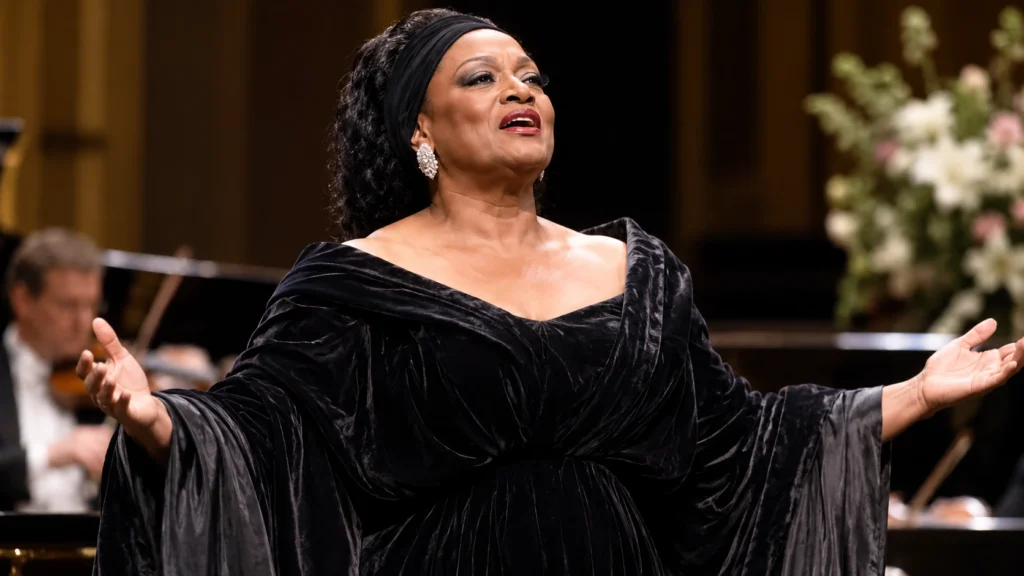
Who Was Jessye Norman?
According to Encyclopaedia Britannica, Jessye Norman was an American operatic soprano regarded as one of the finest of her day, who also built a successful concert career. She was known for her interpretations of Wagner, Richard Strauss, and Berlioz, and for a voice The New York Times once described as spanning enormous dimensions. Beyond the opera stage, she was an accomplished recitalist and a prominent advocate for arts education, work she continued until her death.
Early Life and Education
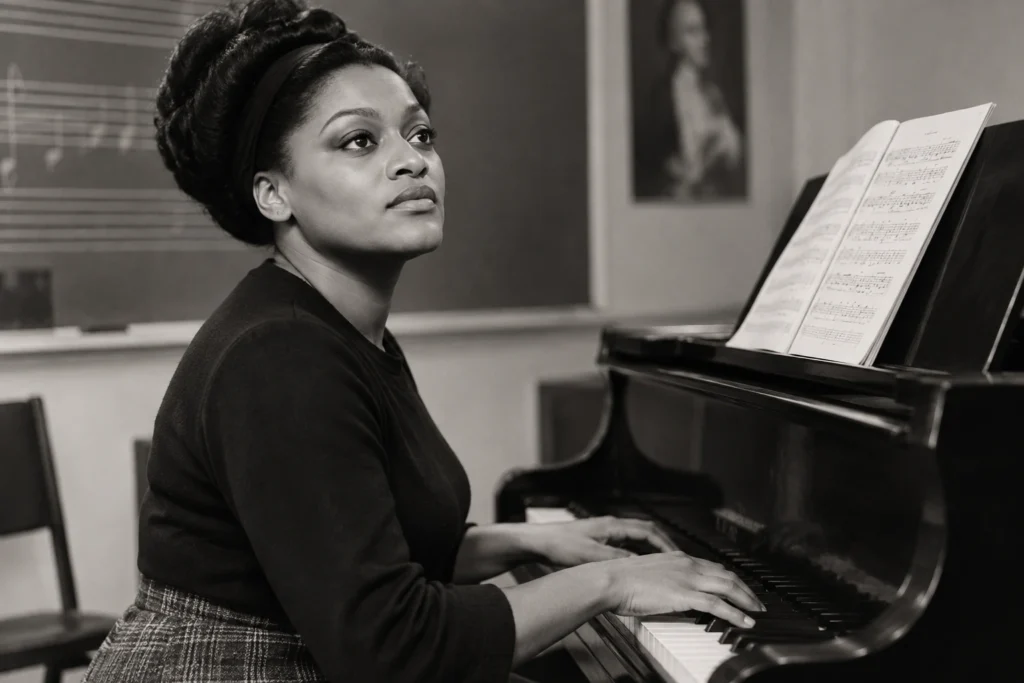
Norman was born on September 15, 1945, in Augusta, Georgia. Multiple biographical sources, including The HistoryMakers and Encyclopedia.com, identify her parents as Janie King Norman, a schoolteacher, and Silas Norman, an insurance salesman, and note that both her mother and grandmother were pianists while her father sang in church. She was one of five children in a musical household.
She began singing gospel music in church by around age four and, as a girl, became captivated by weekly radio broadcasts of the Metropolitan Opera. As a teenager she competed in the Marian Anderson Vocal Competition in Philadelphia and, although she did not place, the experience led to an audition at Howard University. She earned a full scholarship there and completed her bachelor’s degree in music in 1967, later studying at the Peabody Conservatory in Baltimore and earning a master’s degree from the University of Michigan in 1968.
Jessye Norman’s Opera Career
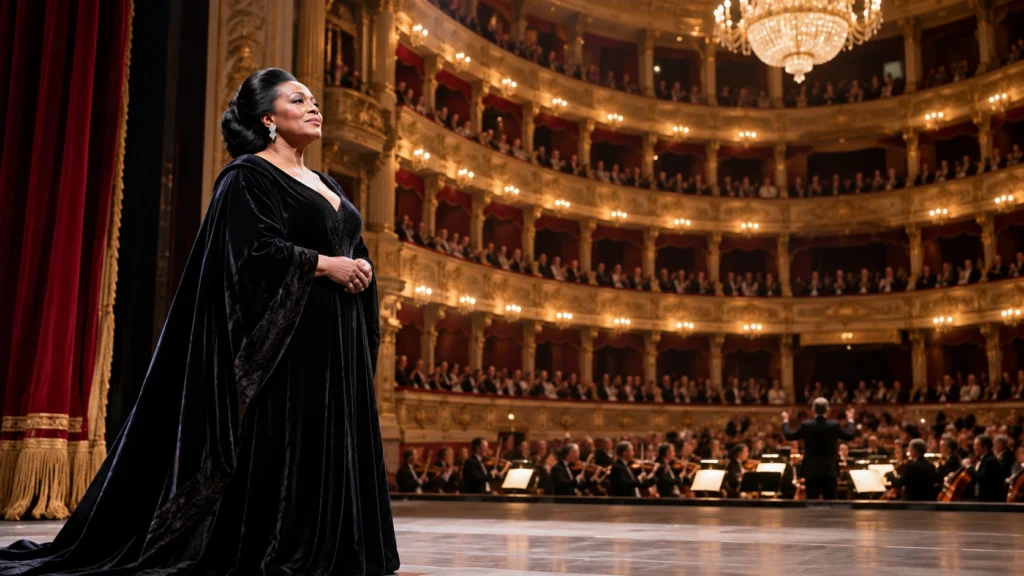
Norman’s professional breakthrough came in 1968 when she won the ARD International Music Competition in Munich. That victory led to her operatic debut in December 1969, singing Elisabeth in Wagner’s “Tannhauser” with the Deutsche Oper Berlin, and to a multi-year contract with the company.
Through the 1970s, according to the Kennedy Center’s official artist biography, she received a steady stream of invitations for operas and recitals and performed at venues from La Scala to the Vienna State Opera. Her American opera debut came in 1982 with the Opera Company of Philadelphia, and her Metropolitan Opera debut followed in September 1983. In 1989, she took part in the Met’s first-ever single-character production, Schoenberg’s “Erwartung,” and during the company’s centennial season she made history singing both Cassandre and Didon in Berlioz’s “Les Troyens.” By the time of her death, she had appeared in more than 80 performances with the Metropolitan Opera.
Jessye Norman’s Songs and Most Famous Performances
People searching for “Jessye Norman songs” are usually looking for two different things: her signature opera roles, and the non-operatic recordings that introduced her to a wider audience.
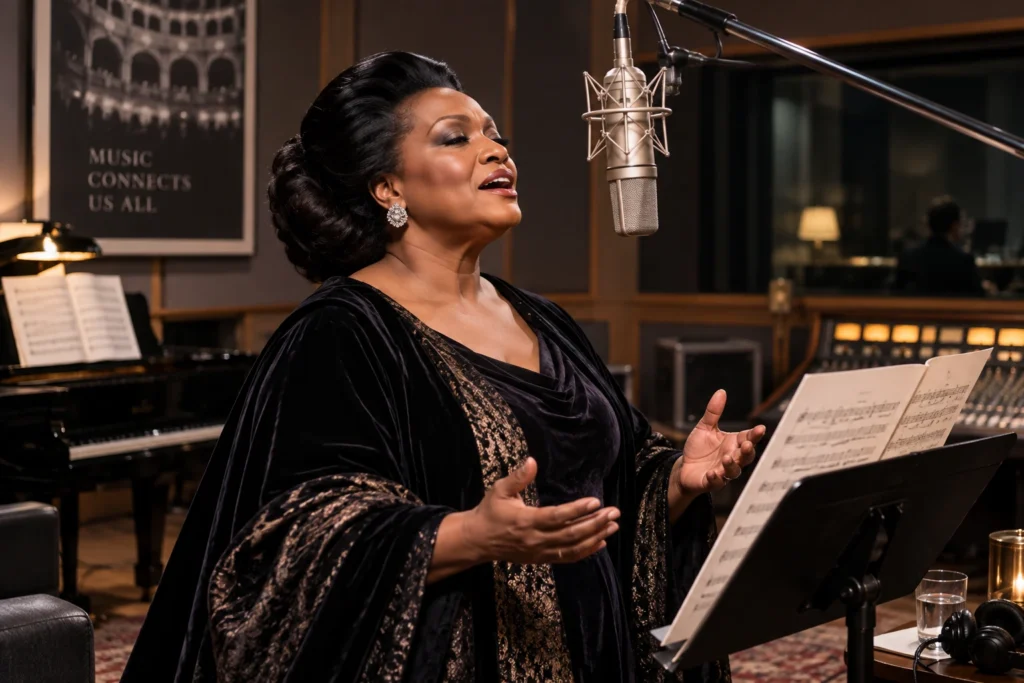
On the operatic side, she was closely associated with Wagner roles such as Sieglinde and Kundry, Strauss’s Ariadne, and the title role in Verdi’s “Aida,” alongside acclaimed portrayals in Bizet’s “Carmen” and Purcell’s “Dido and Aeneas.”
Outside opera, Norman recorded extensively across genres. Her albums “Spirituals” (1979) and “Sacred Songs and Spirituals” brought traditional pieces such as “Amazing Grace,” “Ev’ry Time I Feel de Spirit,” and “Were You There” to new listeners.
Her 1991 collection “Amazing Grace” remains one of her best known non operatic releases. Later in her career, she recorded “Roots: My Life, My Song,” a live album of jazz, gospel, and American standards.
She also released “I Was Born in Love With You,” a jazz crossover project with French composer Michel Legrand. She performed at significant public events, including “Simple Gifts” at Ronald Reagan’s 1985 inauguration, “La Marseillaise” at the Bastille Day bicentennial in Paris in 1989, and Schubert’s “Ave Maria” at Jacqueline Kennedy Onassis’s funeral in 1994.
Awards, Honors and Major Achievements
Norman received some of the highest honors available in American and international arts, along with roughly forty honorary doctorates from institutions including Harvard, Yale, and Juilliard, according to the Kennedy Center.
| Achievement | Year | Significance |
|---|---|---|
| ARD International Music Competition win | 1968 | Launched her European operatic career |
| Metropolitan Opera debut | 1983 | Marked her arrival at America’s leading opera house |
| Kennedy Center Honors | 1997 | At the time, made her the youngest recipient in the award’s history |
| Grammy Lifetime Achievement Award | 2006 | Made her the fourth classical artist to receive the honor |
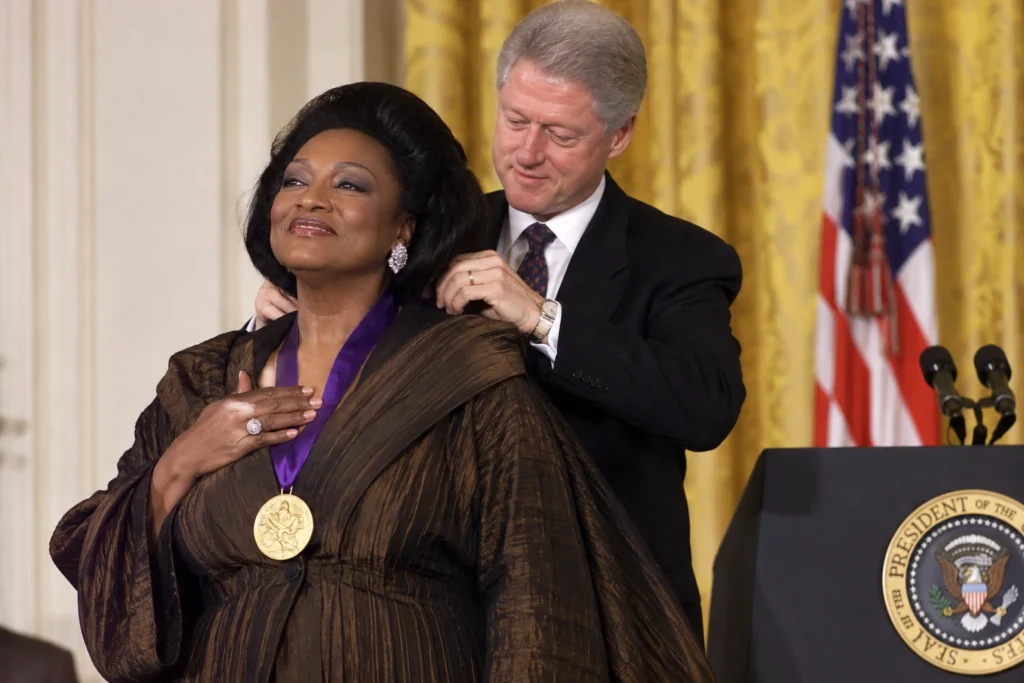
| National Medal of Arts | 2010 | The United States’ highest honor for individual artists, presented by President Obama at the White House |
She was also named a Commander of France’s Order of Arts and Letters and later received the Legion of Honor, was designated an honorary ambassador to the United Nations in 1990, and received the NAACP’s Spingarn Award.
A note on her Grammy total: Sources do not fully agree on Norman’s exact Grammy count. The Associated Press and several 2019 obituaries described her as a four-time Grammy winner, while the National Endowment for the Arts and the University of Michigan cite five Grammy Awards. The discrepancy generally comes down to how shared or ensemble album credits are counted. What is consistently confirmed is that she won competitive Grammys for classical vocal and opera recording categories in the 1980s and 1990s, and that in 2006 she received the separate, non-competitive Grammy Lifetime Achievement Award, becoming the fourth classical artist to be given that honor.
Jessye Norman’s Personal Life
Norman was known for keeping her personal life private throughout her career, and she rarely discussed romantic relationships in interviews. The information below reflects what is documented in her own 2014 memoir and in obituaries published by major outlets; where sources are thin, that is noted rather than filled in with assumption.
Was Jessye Norman Ever Married?
There is no documented record, in her memoir, in contemporaneous news coverage, or in obituaries from outlets such as the Associated Press and The Washington Post, of Jessye Norman ever having a husband. Because she was intentionally private about her personal relationships, this should be read as “no marriage is documented in reliable sources,” rather than a claim that her romantic history is fully known to the public.
Did Jessye Norman Have Children?
No source, including her own memoir and major obituaries, documents any biological children. Norman was known for describing the students at the arts school she co-founded as her “children” in a figurative sense, a comment sometimes misread online as evidence of an actual family. Reliable reporting does not support that reading.
Jessye Norman’s Family and Related Names
Two commonly searched names deserve separate treatment because they are easy to confuse. Silas Norman was Jessye’s father, an Augusta insurance salesman who sang in his church choir; he died in 1979. Janie King Norman was her mother, a schoolteacher and pianist who arranged for Jessye’s early piano lessons. Separately, Jessye had an older brother who shared the same first name as their father: Dr. Silas Norman Jr. (1941 to 2015) was a civil rights activist and later a longtime faculty member at Wayne State University’s medical school in Detroit. These are documented, distinct family members, not a naming error in her biography.
Jessye Norman’s Accident or Spinal Cord Injury
Search interest in a Jessye Norman “accident” traces back to a spinal cord injury she sustained in 2015. Her family’s own public statements, issued after her death in 2019, confirmed the injury but did not describe how it happened, and no major news organization has published a verified account of the specific incident. Some online sources speculate about a fall or a car accident, but these details are not confirmed by any primary source connected to Norman or her family, and this article does not repeat them as fact. What can be stated reliably is that the injury led to lasting health complications that affected her in her final years
What Happened to Jessye Norman?
After the 2015 injury, Norman reduced her public performance schedule but remained active in arts education, continuing her long involvement with the Jessye Norman School of the Arts in Augusta and her board work with organizations such as the New York Botanical Garden and the Lupus Research Alliance. Public appearances became less frequent in her final years. The lasting effects of the spinal cord injury ultimately led to the medical complications that caused her death in 2019.
Jessye Norman’s Death and Legacy
Jessye Norman died on September 30, 2019, at Mount Sinai St. Luke’s Hospital in New York City, at age 74. According to a statement from her family reported by the Associated Press, the cause of death was septic shock and multi-organ failure, secondary to complications of the 2015 spinal cord injury. She died surrounded by loved ones.
Her death drew tributes from across the music world. The Metropolitan Opera, where she had sung more than 80 performances, dedicated a performance to her memory, with general manager Peter Gelb calling her one of the greatest artists ever to sing on its stage. Norman’s legacy lives on through her extensive recorded catalog, through the Jessye Norman School of the Arts, and through the path she helped clear for later Black classical singers such as Kathleen Battle, following earlier trailblazers including Marian Anderson and Leontyne Price.
Jessye Norman Net Worth
No verified net worth figure for Jessye Norman has been published by a reputable financial or entertainment industry source. Figures circulating on celebrity net worth websites are typically estimates built from public information about album sales, performance fees, and endorsements, and these sites generally do not disclose their sourcing or methodology, which makes their numbers difficult to verify. Norman did not make her personal finances public, and no estate filing, official biography, or major news obituary reports a specific figure. Readers should treat any exact net worth number they encounter online as an unverified estimate rather than a documented fact.
Jessye Norman Height and Other Personal Details
There is no verified, sourced figure for Jessye Norman’s height or weight in any authoritative biography, obituary, or institutional profile. She was frequently described in reviews and profiles as a physically commanding, statuesque presence on stage, and she spoke candidly in interviews, including her memoir, about how her stature shaped which roles she chose to perform and how she carried herself as a performer. Numbers found on unofficial celebrity data sites are not corroborated by any primary source and should not
Why Is Jessye Norman Famous?
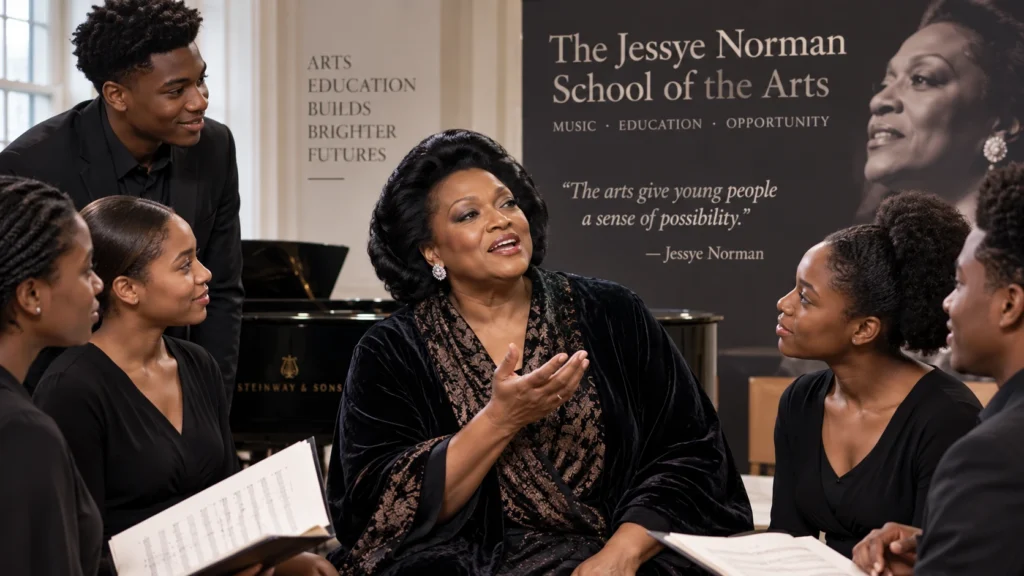
Jessye Norman is famous for being one of the leading dramatic sopranos of her generation and one of the first Black women to achieve major, sustained international stardom in opera. She built her reputation through performances at the Metropolitan Opera and La Scala, her interpretations of Wagner and Strauss, her recordings of spirituals and jazz standards, and her Grammy Awards, including the Grammy Lifetime Achievement Award. She is also remembered for founding the Jessye Norman School of the Arts, a tuition-free arts program for young people in her hometown of Augusta, Georgia.
FAQs
How many Grammy Awards did Jessye Norman win?
Sources vary between four and five, largely due to how shared album credits are counted. She won competitive Grammys for opera and classical vocal recordings and separately received the Grammy Lifetime Achievement Award in 2006.
What songs is Jessye Norman known for outside of opera?
She is widely known for her recordings of spirituals such as “Amazing Grace” and “Were You There,” and for her jazz crossover album with Michel Legrand, “I Was Born in Love With You.”
Was there ever a Jessye Norman husband?
No marriage is documented in her memoir or in reliable news coverage. She kept her personal relationships private throughout her life.
Is it true Jessye Norman had children?
She had no documented biological children. She referred to her students at the Jessye Norman School of the Arts as her “children” in a figurative sense.
What actually happened with Jessye Norman’s spinal cord injury?
She sustained a spinal cord injury in 2015. The specific circumstances were never publicly detailed by her or her family, so accounts describing a specific accident should be treated with caution.
Is a specific net worth figure for Jessye Norman reliable?
No. No authoritative financial source has published a verified figure, so any specific number found online is an unconfirmed estimate.
What honors define her legacy today?
The Grammy Lifetime Achievement Award, the Kennedy Center Honors, the National Medal of Arts, and the Jessye Norman School of the Arts are the honors and institutions most closely tied to how she is remembered.
Final Words
Jessye Norman’s career reshaped expectations of what a classical singer could achieve, pairing vocal power with interpretive depth across opera, spirituals, and jazz. She kept her personal life private and never married or had children, but she left behind an extensive recorded catalog and an arts school that continues to train young musicians in Augusta. Her 2019 death, following complications from a 2015 spinal cord injury, closed a remarkable chapter in American classical music, though her influence continues through the artists and institutions she inspired.